The opener ignores you — but from where? The remote, the keypad, and the wall button are three separate paths into the same motor, and which ones work tells you almost everything. Five minutes of button-pressing narrows the failure to one layer before you spend anything.
The decision tree
- Wall button works, remote doesn’t. The motor and wiring are fine — the problem is in your hand. Start with the remote’s battery (they die quietly after years), then re-program the remote to the opener.
- Nothing works, but the opener has power. Check the wall console for lock mode — an engaged lock disables all remotes and the keypad while the wall button’s main control still works. It gets bumped by accident constantly.
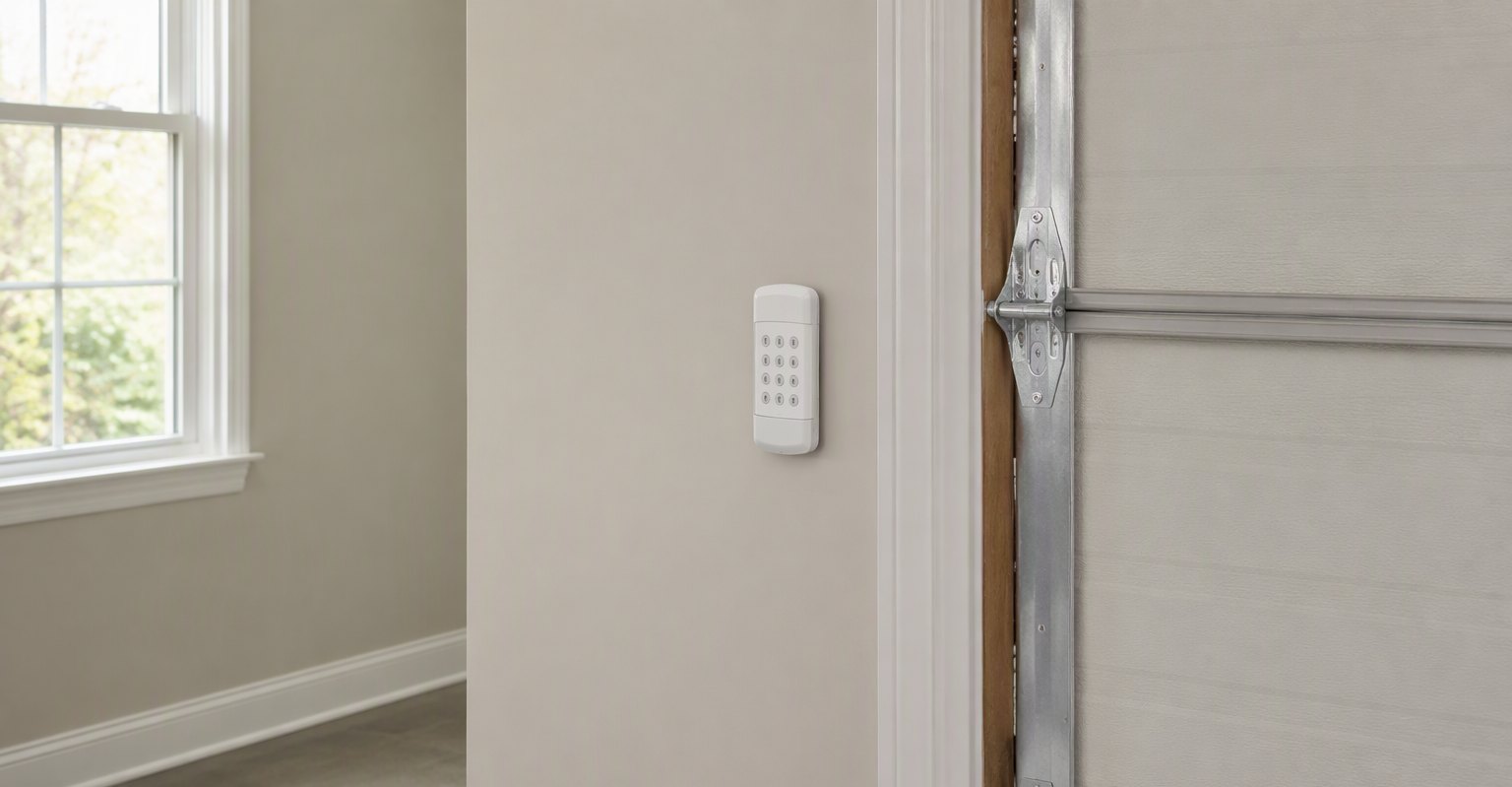
- Keypad dead, remote fine. Keypad batteries first, then re-pairing. Valley heat cooks keypad batteries faster than the manual admits.
- Everything dead, motor silent. Check the outlet (plug something else in), then the breaker, then the GFCI the opener shares a circuit with. Only after all three is the motor itself a suspect.
When it’s the ceiling unit
If every control path fails on a powered opener, the failure is inside the motor head — capacitor, logic board, or wiring. Humming with no movement points at the capacitor (the part Riverside heat kills first). Total silence with power present points at the board. Both are diagnosable to the component on site, and both have an honest repair-versus-replace answer depending on the unit’s age.
The age question
An opener past fifteen is missing rolling-code security, battery backup, and modern sensor behavior. When a board or gear fails on a unit that old, the repair quote often lands close to a new belt-drive with all of that included — we show you the numbers both ways before touching anything. The full service breakdown is on the opener page.