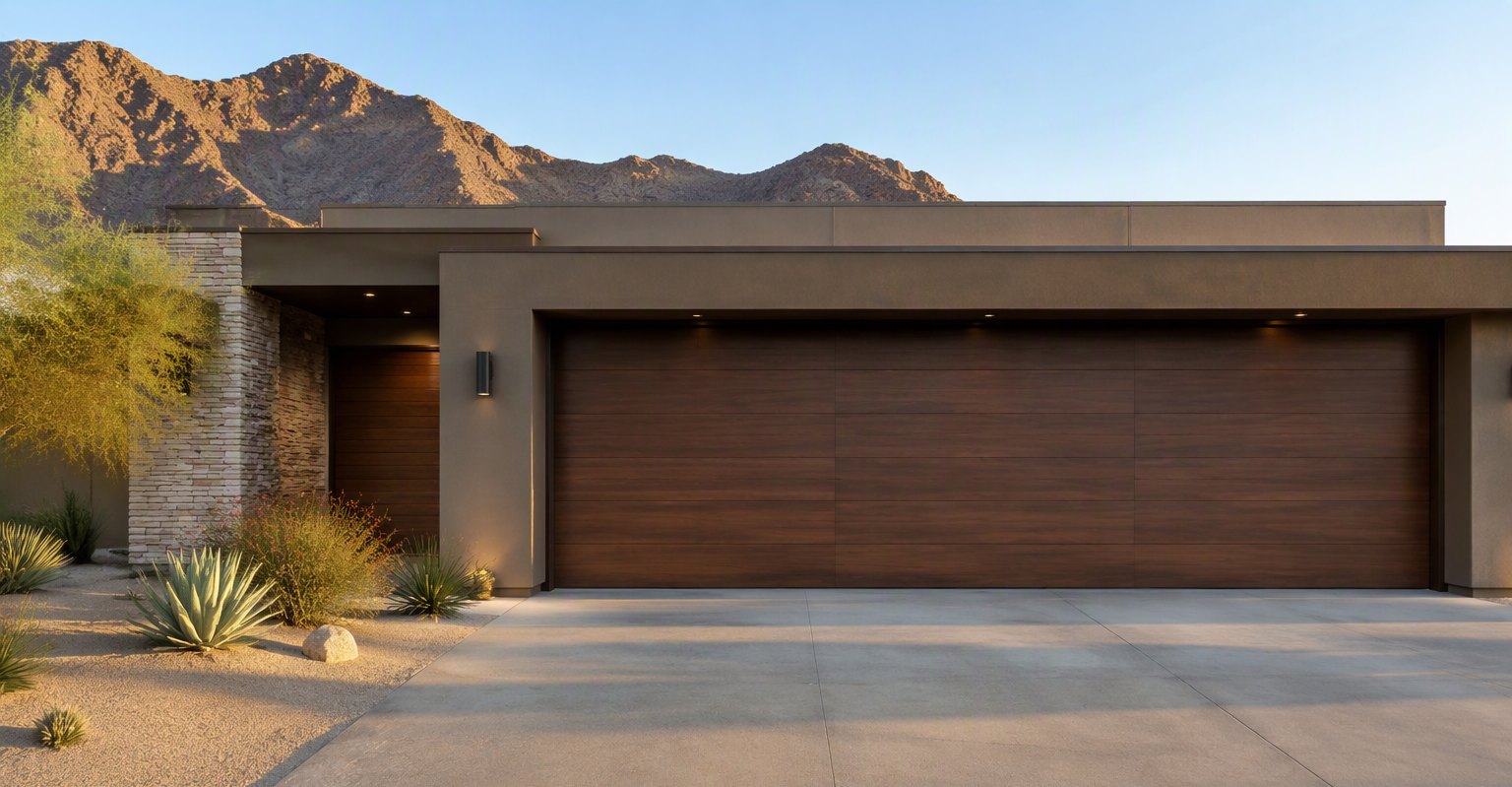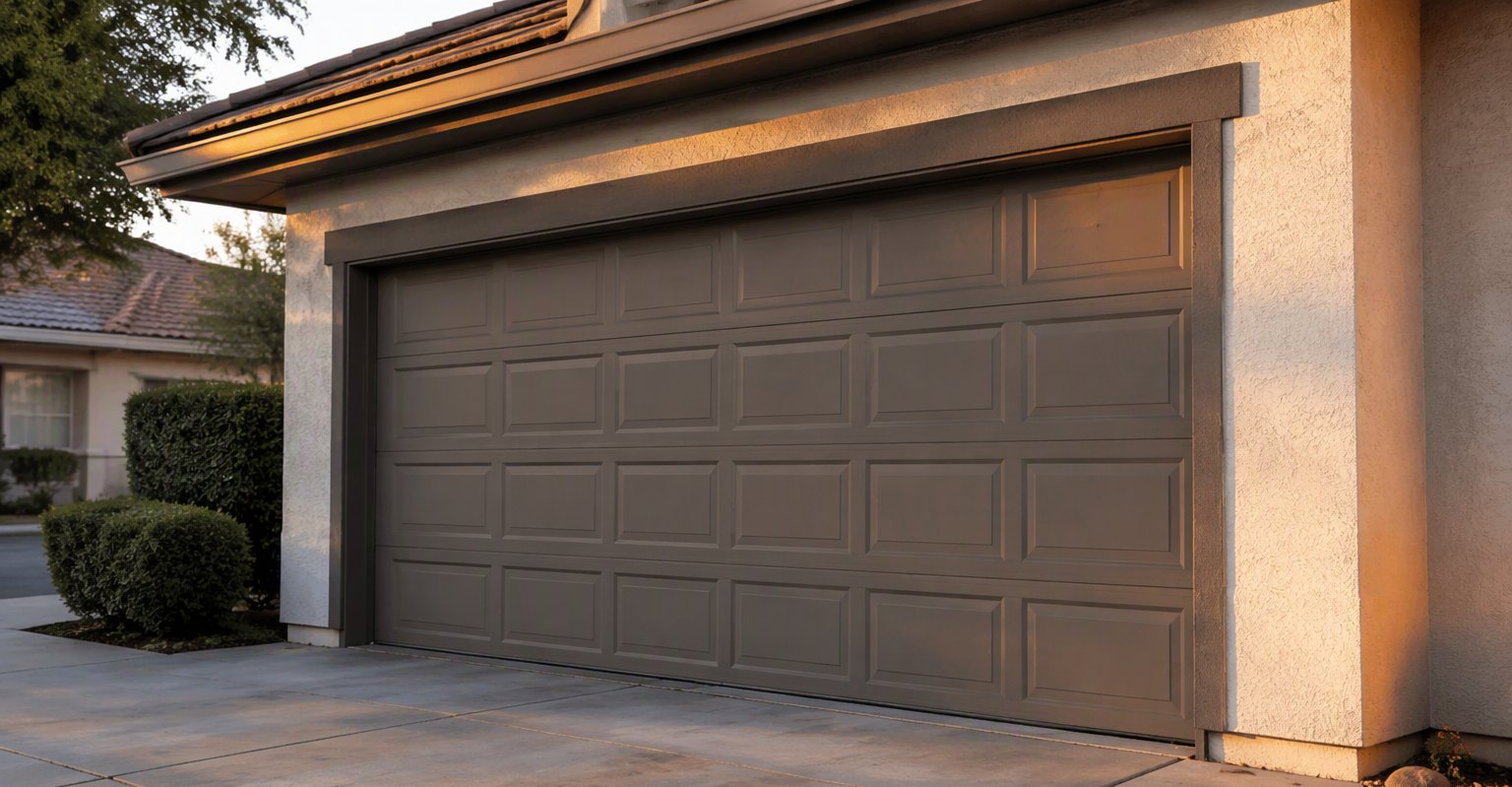
Every fall, the Santa Anas shove hot dry air through the passes and across the valley — and the largest moving surface on your house takes it broadside. Garage doors flex, rack, and grind through wind season, and the damage usually announces itself weeks later as noise and binding that homeowners never connect to October.
What the wind actually does
A closed double door is a sail: gusts load it with hundreds of pounds of lateral force. The door pushes against its tracks, the tracks push against their brackets, and brackets that were merely snug in September are loose by December. Doors traveling during a gust rack sideways — rollers bite the track edge, and the door comes down crooked. Seals take a beating too: wind-driven dust and debris grind against bottom rubber and side vinyl all season.
The ten-minute post-wind inspection
- Watch one full cycle. Open and close the door while watching both tracks. Grinding, hesitation, or a crooked hang means the wind moved something.
- Check the track brackets. The bolts holding vertical tracks to the wall loosen under repeated gust load. A wrench and ten minutes beats a jumped track.
- Look at the bottom seal. Cracked, flattened, or chalky rubber lets January’s dust and June’s heat straight in. It’s an inexpensive part.
- Listen at the rollers. New rattling after a wind event is grit in the bearings — cleanable early, destructive if it rides all winter.
When the door needs more than a checklist
If the door hangs visibly crooked, a roller has left the track, or the door binds hard partway — stop running it. A racked door under spring tension is a drop hazard, and the fix is a same-day realignment, not a wait-and-see. Homes under the foothills and along the pass corridors take the worst of it; if that’s you, the annual tune-up belongs on the calendar before wind season, not after. The cable and track service page covers what we true, tension, and replace.